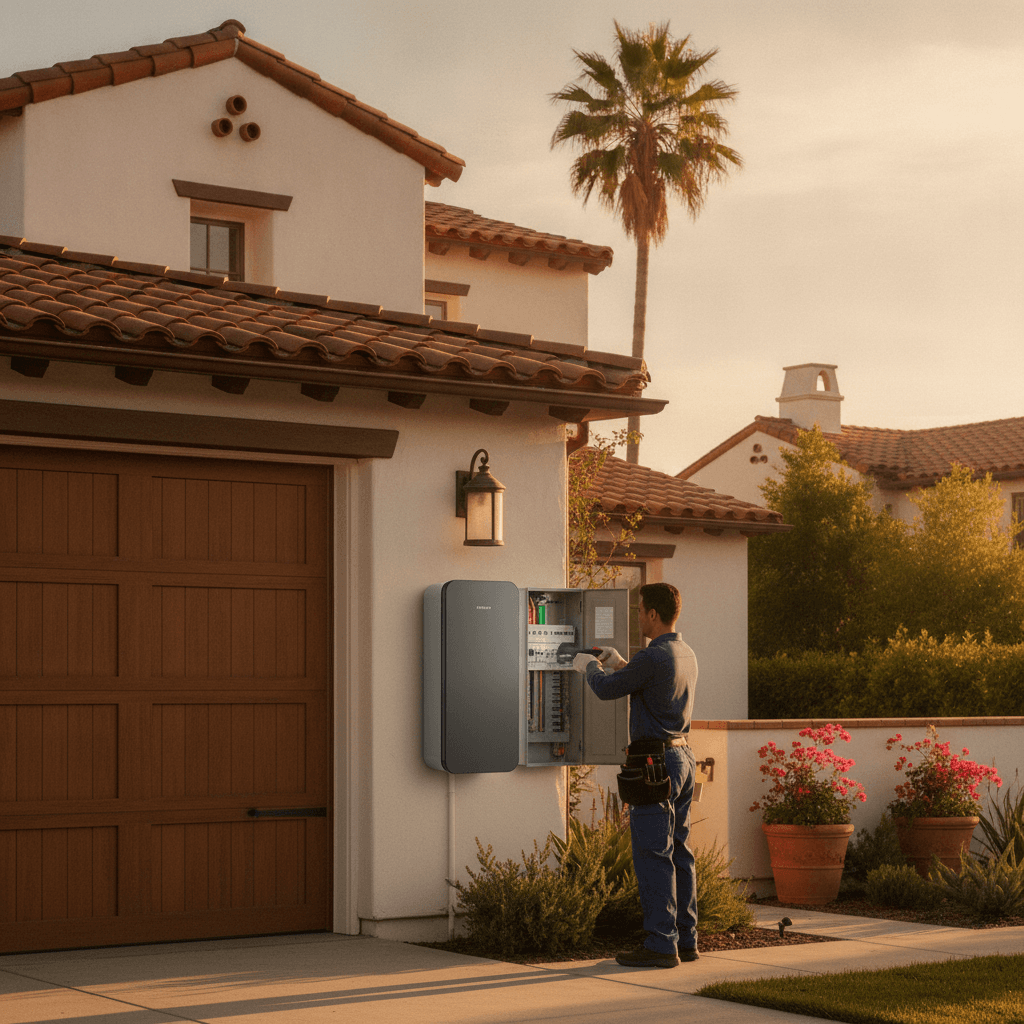
What a California home battery actually costs installed in 2026, the electrical work that drives the spread, and what SGIP and the federal credit currently pay.
Budget
Quick answer: A fair mid-2026 California quote runs $11,500 to $18,000 installed for one whole-home battery, plus $1,300 to $5,000 or more in real electrical work if your panel or service needs to change. SGIP is not the discount it used to be: as of September 9, 2026, the general-market Small Residential Storage budget is closed, and the income-qualified equity budgets are closed or waitlisted everywhere except a limited San Joaquin Valley pilot. The federal 25D credit is $0 for anything placed in service after December 31, 2025. Price the quote as if no rebate applies, then treat any incentive that is actually funded as a bonus.
Best for
Homeowners comparing installed battery quotes in California in 2026.
Wrong fit
Off-grid cabins, RV systems, marine systems, or commercial storage projects.
Tradeoff
A lower quote is not fair until you know whether it is skipping real electrical work or padding it, and whether the incentive it assumes is actually funded right now.
California is the first market to check because NEM 3.0 changed the battery decision and because the incentive picture here shifts faster than almost any other state. A fair quote still depends on installed price per usable kWh, the electrical work behind it, and whether the installer's incentive assumptions are actually funded today, not a year ago.
The goal is not to pick the biggest battery. The goal is to know what the quote includes, whether the design fits your outage pattern, and what the same usable capacity should cost before any rebate is applied.
Quick Answer
Price a whole-home battery install in California at $11,500 to $18,000 for the battery, gateway, labor, and permits, plus $1,300 to $5,000 or more if your panel or electrical service needs real work. Checked September 9, 2026: the SGIP budget most quotes used to lean on, Small Residential Storage, is closed at Step 7 with no funds available to general-market applicants. The income-qualified Residential Solar and Storage Equity budgets are closed (ratepayer-funded track) or waitlisted (taxpayer-funded AB 209 track) statewide, with the narrow exception of an open San Joaquin Valley pilot. The federal 25D credit does not apply to anything placed in service after December 31, 2025. Build your budget on the gross installed price first, then add any incentive you can confirm is currently funded in your utility territory.
What a fair installed price looks like right now
Line item
Mid-2026 installed range
Notes
One whole-home battery (13.5 kWh class, e.g. Powerwall 3)
$11,500-$18,000
Battery, gateway, labor, and permits for a single unit. See the real cost of a home battery for the full national breakdown.
Second battery, same design
+$7,000-$11,000
Usually cheaper than the first because gateway and design work are already in place
Dollar-per-usable-kWh sanity check
About $1,040 per usable kWh is a normal mid-2026 number
Near $1,500 per usable kWh, the quote needs to explain itself. Divide the installed price by usable kWh, not nameplate capacity, per the home battery buying guide.
The electrical work most quotes bury
A single "panel work" line hides two very different jobs, and only a load calculation against your actual panel tells you which one you need. The full breakdown, including when California's interconnection rules genuinely require an upgrade, is in the panel upgrade cost guide. The mid-2026 ranges:
Electrical work
Mid-2026 range
When it applies
Backup-loads subpanel only
$1,500-$3,000
Essential-loads design, existing panel has room
100-to-200-amp panel swap, open access
$1,300-$3,000
Older panel, no meter work needed
Add meter base or service-entrance work
+$1,800-$3,500
Common on older services, often paired with a panel swap
Full panel and service upgrade for whole-home interconnection
$3,000-$5,000+
Whole-home design, or solar and battery installed together
Permit and inspection
$50-$300
Every install, varies by jurisdiction
If your quote gives one number for "electrical work" with no split and no mention of your existing panel's amperage, that is not yet a price you can evaluate.
What SGIP actually pays right now
SGIP has four separate residential storage budget categories, and mixing them up is the single most common incentive mistake in a California battery quote. This table is a live snapshot, not a fixed program rule: the SGIP Program Administrator's Incentive Step Tracker updates nightly, and a step can close between the day we checked and the day you apply.
Budget
Who it's for
Rate
Status, checked September 9, 2026
Small Residential Storage (general market)
Any residential customer, no income test
$150 per kWh
Closed. Step 7 is fully reserved. No funds available to new general-market applicants.
Residential Solar and Storage Equity, ratepayer-funded
Income-qualified or disadvantaged-community households
$1,100 per kWh
Closed. This ratepayer-funded track closed to new reservations December 31, 2025.
Residential Solar and Storage Equity, AB 209 (taxpayer-funded)
Income-qualified or disadvantaged-community households
$1,100 per kWh storage, $3,100 per kW solar
Waitlist only. New applications are not currently being funded.
San Joaquin Valley Residential Equity
Income-qualified households in San Joaquin Valley disadvantaged communities
$1,100 per kWh
Open. The only residential storage budget currently funding new reservations, and it is geographically limited to that pilot area.
In practice, this means most California homeowners getting a quote today should assume SGIP contributes $0 unless they are income-qualified, live in the San Joaquin Valley pilot area, or their installer already has funds reserved from before the general-market budget closed. See the SGIP battery rebate guide for eligibility categories and how to verify your own status before signing.
The federal credit is not part of this math anymore
The federal Residential Clean Energy Credit (25D) is $0 for any battery placed in service after December 31, 2025, per the IRS's own guidance following the credit's repeal under Public Law 119-21. A 2026 quote that still bakes in a 30 percent federal credit for a cash or loan purchase is describing a program that no longer applies. See battery tax credit 2026 for the lease and PPA distinction, which is handled differently.
Worked example: one Powerwall 3, whole-home, in California today
Panel and service upgrade, sized for whole-home interconnection: $4,000
Permit and inspection: $200
Gross installed total: $18,200
SGIP, general market, checked September 9, 2026: $0 (Small Residential Storage is closed)
Federal 25D: $0 (placed in service after December 31, 2025)
Net price: $18,200
Dollar per usable kWh: $18,200 / 13.5 kWh = about $1,348 per usable kWh, above the roughly $1,040 mid-2026 benchmark
The gap above the benchmark here comes entirely from a real, itemized panel and service upgrade, not from battery padding. That is the distinction a fair quote should let you make. If your installer cannot show a load calculation behind a similar panel line, or assumes an SGIP credit that is not currently funded, that is the padding.
Quote red flags
No NEM 3.0 or NBT modeling using your actual rate plan and export credit.
No utility territory named.
SGIP shown as guaranteed savings, or applied to a general-market install without saying which budget category and confirming it is currently funded.
One lump "electrical" or "panel" number with no split between subpanel work and a main panel or service upgrade.
A 2026 quote still marketing a 30 percent federal tax credit for a cash or loan purchase.
What to ask before signing
What is the installed price per usable kWh?
Which SGIP budget category are you assuming, and can you show it is currently open and funded in my utility territory?
Is panel or service work included, and is it a backup subpanel, a main panel upgrade, or both?
Which loads are backed up, and for how long?
Is this whole-home backup or essential-loads backup?
Does the incentive math show gross price, incentive assumption, effective date, and net price separately?
Run the numbers on your own quote with the quote calculator, or send the full proposal through our free quote review.
What we could not verify this run
SGIP's Incentive Step Tracker is a live, nightly-updated tool with no fixed publish date. We captured the September 9, 2026 snapshot directly from the SGIP Program Administrator's Program Metrics page; a step can close or reopen at any time, so confirm current status directly before relying on it.
We could not confirm live whether any California utility runs a battery-specific performance payment comparable to New England's ConnectedSolutions. The clearest current mechanism for California is the NBT/NEM 3.0 export-credit structure, covered in NEM 3.0 and battery storage, which pays for exported energy rather than a fixed per-kWh enrollment incentive. Ask your utility directly about any additional demand-response bill-credit program before assuming one applies to your install.
We did not find a published statewide figure for what share of California battery quotes actually require a panel or service upgrade. The ranges above are cost benchmarks, not a survey of how often each scenario occurs.
Commercial note
Home Battery Guide may earn from affiliate links or flat-fee referrals to named vetted installers. Rankings do not move with compensation. We do not sell the same lead to multiple installers, and a referred installer quote still has to pass the same quote check.
Frequently Asked Questions
Does SGIP still pay for a California home battery in 2026?
Not for most buyers. As of September 9, 2026, the general-market Small Residential Storage budget is closed. The income-qualified Residential Solar and Storage Equity budgets are closed or waitlisted statewide, except for an open pilot limited to income-qualified households in San Joaquin Valley disadvantaged communities. Confirm current status before treating SGIP as part of your budget.
Does NEM 3.0 make batteries mandatory?
Not legally. It makes the economics much more battery-driven for many new solar buyers, since exported solar is worth less than it was under the older net metering rules.
Should I add a battery to existing NEM 2.0 solar?
Maybe. Existing tariff status, backup need, and rate plan matter. Do not assume the new-solar answer applies.
What is a fair price per usable kWh in California?
About $1,040 per usable kWh installed is a normal mid-2026 benchmark. Near $1,500 per usable kWh, ask the installer to explain the gap. A real panel or service upgrade is a legitimate reason. An unexplained number is not.
Is the federal tax credit still available for a 2026 purchase?
No, not for a cash or loan purchase placed in service after December 31, 2025. The 25D credit ended under Public Law 119-21. Lease and PPA treatment is different; see battery tax credit 2026.
These guides are built from public specifications, primary program pages, utility documentation, manufacturer materials, and repeated buyer questions that show up in quote and installation decisions.
Manufacturer and installer responses can clarify pricing bands, warranty terms, support footprint, and common mistakes. They do not move a page up the shortlist on their own.