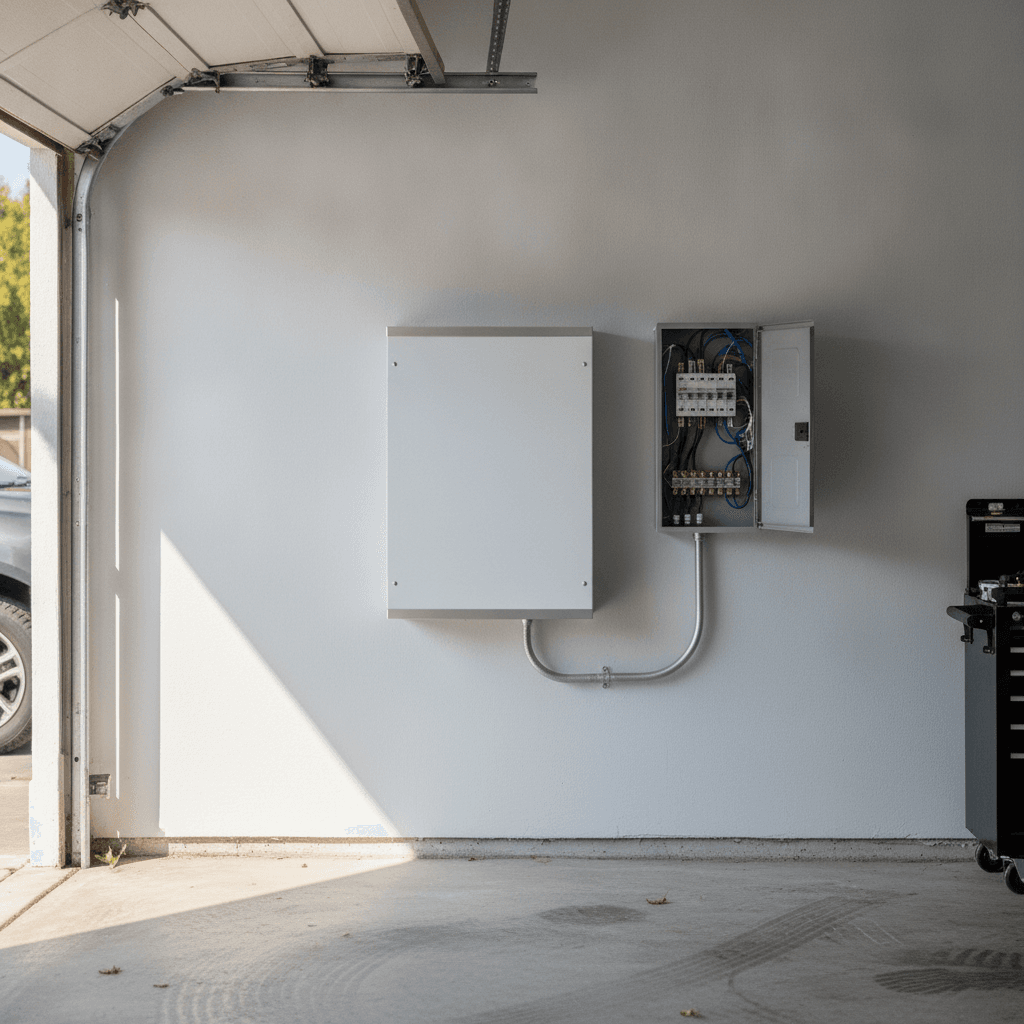
What a California Powerwall 3 quote should cost installed in 2026, when a second unit is worth it, and how to check power, runtime, and incentive assumptions.
Comparison
Quick answer: A fair 2026 California quote for one Powerwall 3 runs about $13,000 to $16,500 installed, plus $1,300 to $5,000 or more if your panel or service needs real work. A second unit should add roughly $7,000 to $11,000, not another full first-unit price. One unit already delivers 11.5 kW continuous, so a second one mostly buys runtime, not power. Assume $0 from SGIP and the federal credit unless your installer shows both are funded and apply to you.
Best for
Homeowners comparing battery quotes in California.
Wrong fit
Off-grid cabins, RV systems, marine systems, or commercial storage projects.
Tradeoff
A second Powerwall adds hours of backup but not output, so it is only worth the money if your outage runtime need, not your peak load, is the limit.
A fair 2026 California quote for one Powerwall 3 runs about $13,000 to $16,500 installed, plus $1,300 to $5,000 or more if your panel or electrical service needs real work. A second unit should add roughly $7,000 to $11,000, because gateway, design, and permit work are already paid for. Judge the quote as an installed system, not a hardware purchase.
The question most California quotes skip is whether you need the second unit at all. Tesla lists 11.5 kW of continuous AC output per Powerwall 3, so one unit already starts and carries most home loads. A second unit adds energy (runtime), not much extra headroom for a typical home.
Quick Answer
One Powerwall 3, installed: about $13,000-$16,500 (battery, gateway, labor, permits). Sources: EnergySage's marketplace average for Powerwall 3 (about $13,500), Tesla-direct quotes of $15,300 to $16,200 in early 2026, and a California installer's $13,000 to $16,500 estimate. The wider $11,500-$18,000 band in the California home battery cost guide covers every 13.5 kWh-class battery, not just Powerwall 3.
Second unit: about +$7,000-$11,000. If the quote prices it near the first unit with no explanation, ask why.
Rebates: as of November 10, 2026, the general-market SGIP budget was closed, and the federal 25D credit is $0 for systems placed in service after December 31, 2025. Do not accept a quote that nets either one out without showing the program status and your eligibility.
Power vs. runtime: one unit is 13.5 kWh and 11.5 kW continuous per Tesla's datasheet. Two units double the kWh, not a typical home's need for kW.
What one vs. two Powerwall 3 units buys you
Prices are the mid-2026 benchmarks used across this site. Capacity and output are from Tesla's Powerwall 3 datasheet. Runtime is simple arithmetic (kWh divided by kW) and ignores reserve settings, conversion losses, and solar input, so treat it as an upper bound.
One Powerwall 3
Two Powerwall 3 units
Energy
13.5 kWh
27 kWh
Continuous AC output (Tesla datasheet, per unit)
11.5 kW
Up to 23 kW, if the design and gateway support stacking
Installed price (benchmark)
$13,000-$16,500
$20,000-$27,500
Installed price per kWh
about $963-$1,222
about $741-$1,019
Upper-bound runtime at a 1.5 kW average load
about 9 hours
about 18 hours
Upper-bound runtime at a 3 kW average load
about 4.5 hours
about 9 hours
Why the second unit looks cheaper per kWh: the first unit carries the gateway and design cost. That does not make it the better purchase. If your longest realistic outage is a few hours, you are paying $7,000-$11,000 for runtime you will not use. If you face multi-day outages or run heavy loads such as an EV charger, the second unit can be the right call. See whole-home vs critical-loads backup to size to your loads first.
Electrical work that moves the total
Ranges are the mid-2026 benchmarks from the panel upgrade cost guide. Only a load calculation against your actual panel tells you which row applies.
Electrical work
Mid-2026 range
When it applies
Backup-loads subpanel only
$1,500-$3,000
Essential-loads design, existing panel has room
100-to-200-amp panel swap
$1,300-$3,000
Older panel
Full panel and service upgrade
$3,000-$5,000+
Whole-home design, or solar and battery installed together
Permit and inspection
$50-$300
Every install
Worked example: two quotes for the same home
Both quotes below are illustrative, built from the benchmarks above, not real proposals.
Quote A: one unit, essential loads
Quote B: two units, whole-home
Batteries and gateway, installed
$14,000
$23,000
Subpanel or service work
$2,000
$4,000
Permit
$200
$200
Gross total
$16,200
$27,200
SGIP and federal credit assumed
$0
$0
Net price
$16,200
$27,200
kWh
13.5
27
Net price per kWh
about $1,200
about $1,007
Quote B has the lower price per kWh and the higher bill by $11,000. Per-kWh pricing only helps if you will use the extra kWh.
NEM 3.0 and the savings claim
Under California's Net Billing Tariff (NEM 3.0), exported solar is worth far less than retail power, so a battery's value depends on shifting solar into the evening peak. A quote's payback claim is only as good as its rate plan, export-credit, and usage inputs. The NEM 3.0 and battery storage guide has the utility rate-versus-export spread. If you have no solar, read home battery without solar before accepting a bill-savings story.
Quote red flags
Quote hides the battery count or says "Powerwall" without naming Powerwall 3.
Second battery costs almost as much as the first with no explanation.
No named Backup Gateway or backup switch scope.
A second unit sold as "more power" for a home that one unit already covers.
No utility-specific rate model, or a payback number with no stated rate plan.
SGIP or a 30 percent federal credit netted out of the price without proof it applies.
One lump "electrical" line with no split between subpanel and service work.
What to ask before signing
How many Powerwall 3 units are quoted, and what is the installed price per usable kWh?
Which loads are backed up, and for how many hours at that load?
Why is a second unit needed: runtime, or a specific heavy load?
Is the gateway or backup switch included, and is panel work included, excluded, or unknown?
Which rate plan and export credit does the savings model use, and what is the date?
Which incentive is assumed, is it currently funded, and what is the net price without it?
Tesla publishes no installed price for California. The $13,000-$16,500 range combines EnergySage marketplace data, Tesla-direct quotes reported by SolarReviews, and a California installer's published estimate; it is not a Tesla figure. Search results for a second-unit or expansion-pack price came mostly from low-quality or templated pages, so we did not use them. The $7,000-$11,000 add-on is the site's existing benchmark.
We could not read all sections of Tesla's datasheet PDF this run. Output figures (11.5 kW AC continuous, 20 kW DC solar, 185 LRA motor start) were read directly from it. The 13.5 kWh and 10-year warranty figures come from the Tesla datasheet cited on our brand comparison.
Whether two units can be stacked to a combined 23 kW depends on the gateway and local design. We did not confirm a published combined rating.
We did not verify whether any import tariff has changed 2026 pricing, so any such effect is not in the ranges.
Commercial note
Home Battery Guide may earn from affiliate links or flat-fee referrals to named vetted installers. Rankings do not move with compensation. We do not sell the same lead to multiple installers, and a referred installer quote still has to pass the same quote check.
FAQ
How much does a Powerwall 3 cost installed in California in 2026?
About $13,000 to $16,500 for one unit, before any extra panel or service work of $1,300 to $5,000 or more. Tesla does not publish a California installed price, so treat this as a benchmark and compare it to your own itemized quote.
Should I get one or two Powerwalls?
Start with the hours of backup you need and the loads you want to run. One unit provides 13.5 kWh and 11.5 kW continuous. A second unit mainly doubles runtime. It is worth it for long outages or heavy loads, not by default.
Is Powerwall 3 good for NEM 3.0?
It can be, but the quote's rate model decides. Under the Net Billing Tariff, a battery earns its keep by moving solar into the evening peak. Ask for the rate plan and export-credit assumption behind the savings number.
Is there a rebate or tax credit for Powerwall 3 in California?
Do not assume one. As of November 10, 2026, the general-market SGIP budget was closed, and the federal 25D credit does not apply to systems placed in service after December 31, 2025. See the SGIP guide and battery tax credit 2026.
Does a second Powerwall 3 cost as much as the first?
It should not. The site benchmark is about $7,000 to $11,000 for the add-on, since gateway and design work are already done. A near-identical price needs an explanation.
These guides are built from public specifications, primary program pages, utility documentation, manufacturer materials, and repeated buyer questions that show up in quote and installation decisions.
Manufacturer and installer responses can clarify pricing bands, warranty terms, support footprint, and common mistakes. They do not move a page up the shortlist on their own.